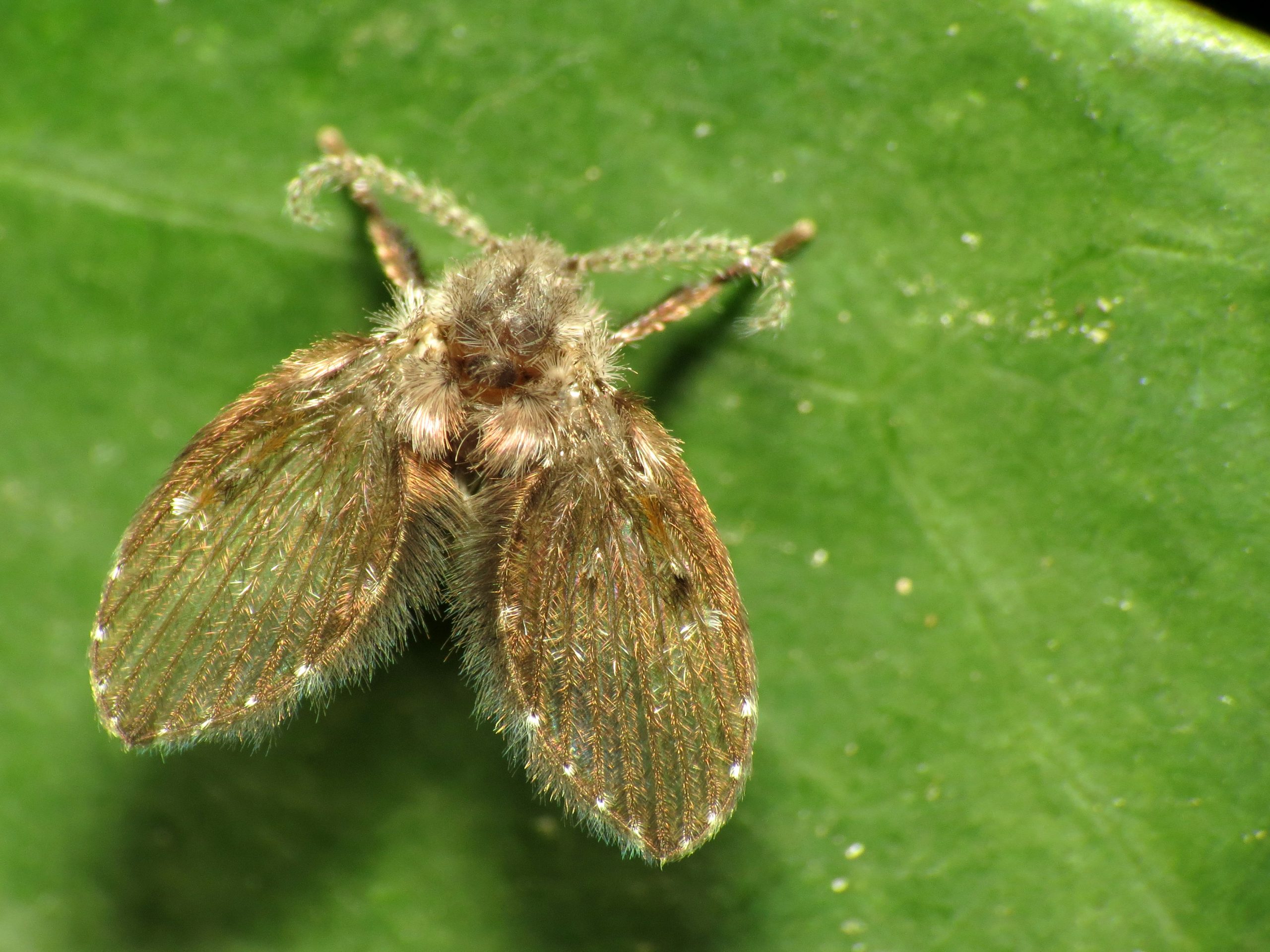
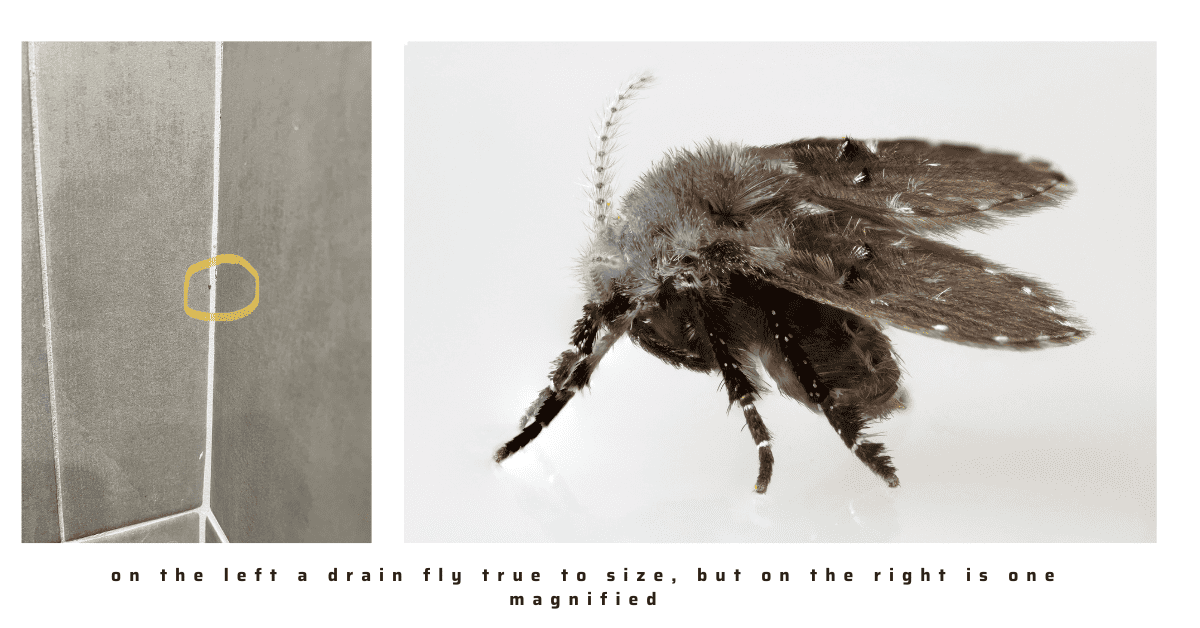
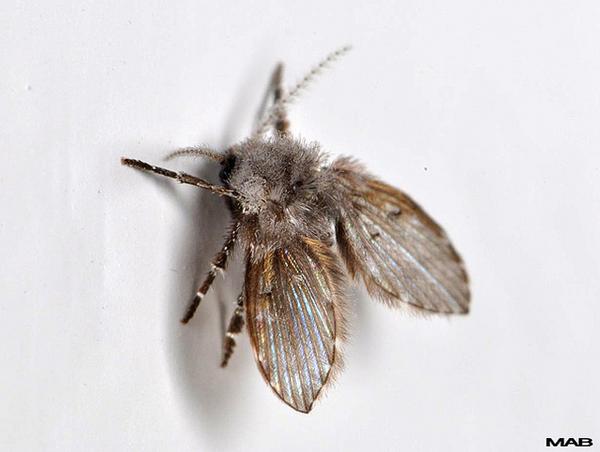
Get info about the Drain Fly from our pest library including appearance, habits, and The Bug Man - Licensed & Insured Exterminator Services's Drain Fly control methods. Drain Fly Actual Size: 1.5 to 5 mm Characteristics: Small; short, hairy bodies and wings, giving them a furry appearance. Legs: 6 Wings: Yes Antennae: Yes Habitat: Live and breed near standing water in drains, septic tanks, compost, and more.
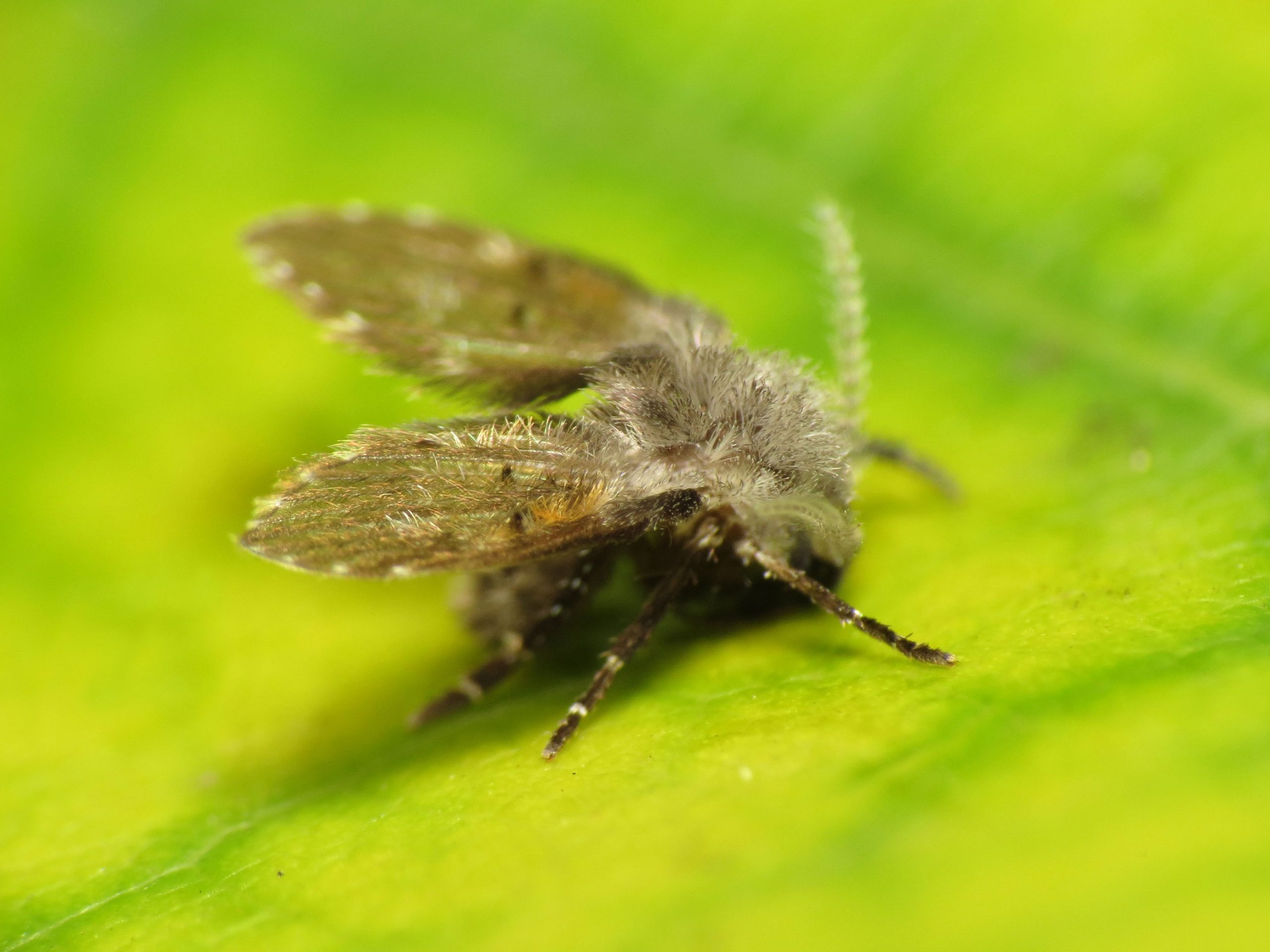
Habits: May appear suddenly from sinks and bathtub drains. Habitat Adult drain flies can be found resting on the walls of bathrooms, kitchens, or in basements. They are often seen on inside bathtubs and shower stalls during the day.

Drain Flies 101: Must Know Facts for Getting Rid of Them
They become more active at night, hovering over drains, sinks, and other breeding areas. Drain flies can also be found around any filters, drains, or condensation drip pans of dishwashers, refrigerators, air conditioning. about drain flies, including what they look like, where they live, and how to get rid of them.

IPM Recommendations Locate the breeding site and remove. Remove larval habitat by using a hard bristle brush to remove the scum film from inside the drain. Use an enzyme drain cleanser to maintain drains free of organic film.

How to Get Rid of Drain Flies: 6 Expert Tips - Truly Blog
If flies are coming from voids, crawl spaces or slabs, fix the moisture issue causing the problem and seal. Additional. Drain Flies Drain flies, also called Moth flies, are small flies with short, hairy bodies and hairy wings that result in a 'furry' or moth-like appearance.
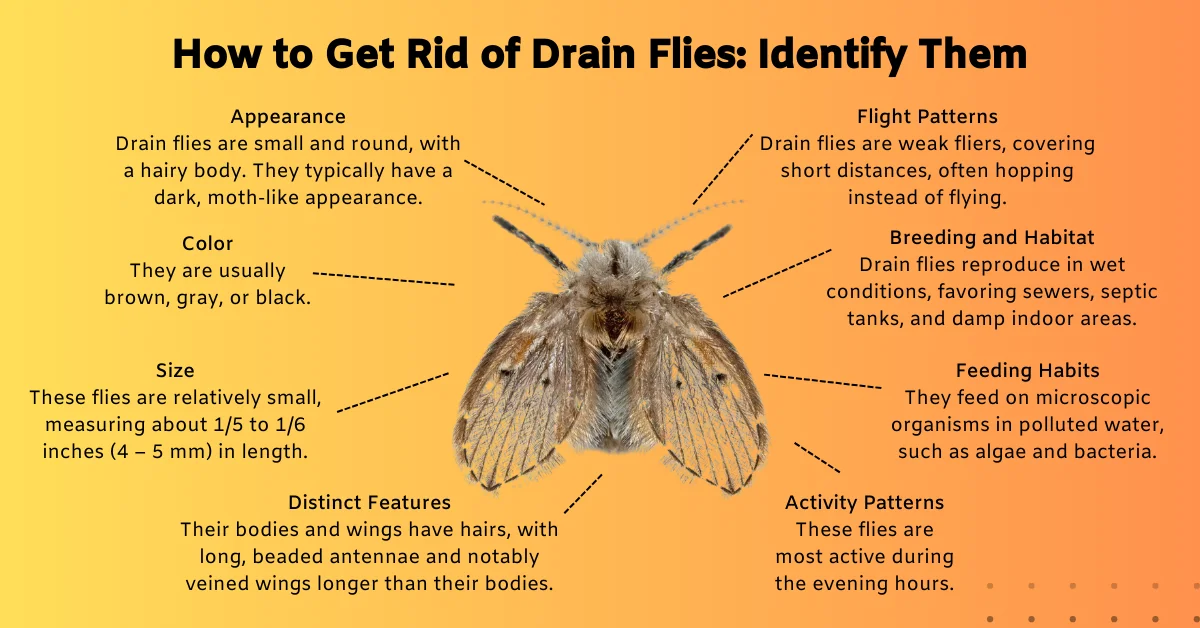
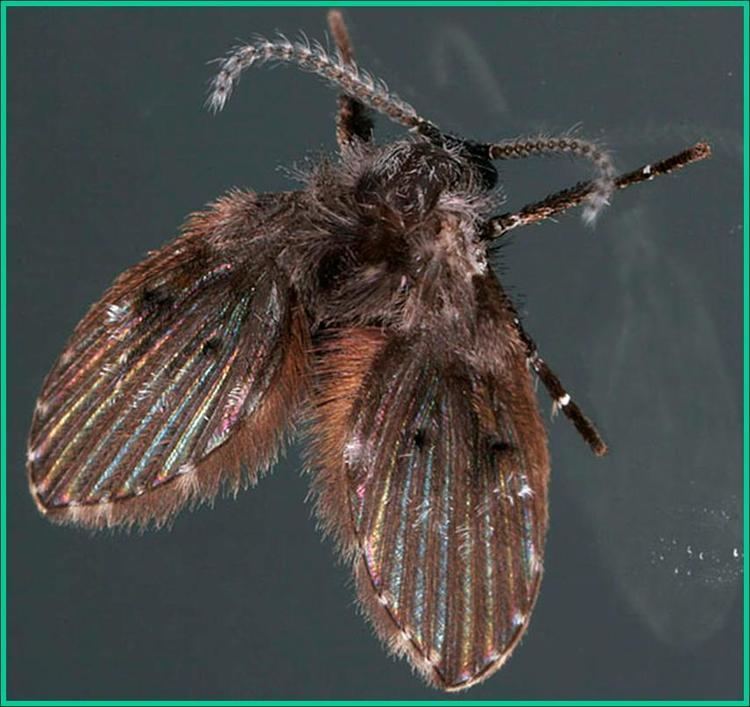
They have leaf-shaped wings, with very rudimentary wing venation (the simplest of any known fly). They are typically nocturnal, and require a damp habitat to live in. The larvae are aquatic to semi-terrestrial, and so can become a major.
Cool Facts About Drain Flies And Their Kin – Your Wild, 40% OFF
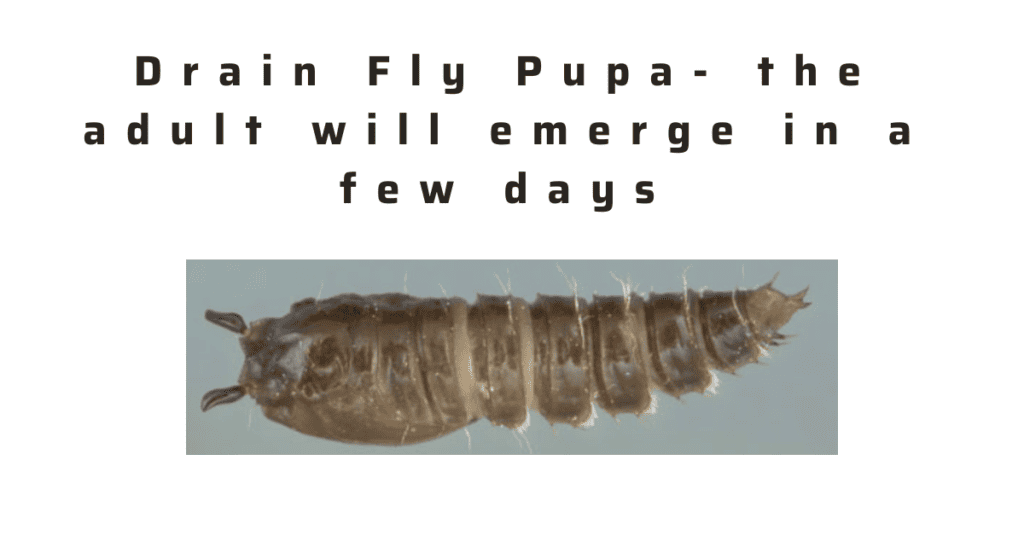
Learn about Drain Flies. Find facts on their appearance, size, behavior, habitat, infestation signs, preventative and control tips. Explore the lifecycle and habitats of drain fly eggs, understanding their environmental needs and common locations for better management.

Drain Fly Habitat Drain flies develop in muck or gelatinous material that accumulates in sewage disposal beds, septic tanks, moist compost, or dirty garbage containers. Habitat and diet of drain flies These insects rely on damp, organic-rich environments for breeding and development, making drains and plumbing systems their ideal habitat.